

There are places in Liverpool that are forever etched into the city’s cultural map. The Grafton Ballroom is one of them. The venue opened in 1924, survived booms and busts, saw performances by The Beatles and dozens of other musicians, and became part of the city’s folklore – from elegant balls to scandalous parties. It is this legendary venue, connected to the show business world, that we will be talking about next on liverpoolski.com.
The Grafton Ballroom: where Liverpool danced and fell in love
When the Grafton Ballroom welcomed its first guests in February 1924, it immediately became one of Liverpool’s main entertainment venues. The hall, designed to accommodate over a thousand dancers, quickly gained popularity as a place for meeting people, making connections, and enjoying evenings with live music.
Located next to the Locarno Ballroom (now the Liverpool Olympia), the building was impressive in both scale and atmosphere. The neoclassical architecture, high ceilings, and wooden floor all created an impression of elegance, even when jazz or swing, rather than classical music, was playing.
In the 1930s to 1950s, the Grafton was the centre of the city’s nightlife. Later on, in the 1970s and 1980s, the hall gained new fame thanks to its “grab a granny” nights, which became almost a local legend. The dances brought generations together, and the Grafton itself became part of the memories of a whole host of Liverpudlians – with romantic stories, loud confessions, and at times, comical adventures.
Starry nights: when the stage belonged to legends
From its earliest years, the Grafton Ballroom attracted not only those who wanted to dance but also musicians. Leading orchestras of the 1930s-1950s performed here – including Joe Loss, Henry Hall, and Victor Silvester. However, the most famous chapter in the hall’s history was its evenings with The Beatles.
The trio from Liverpool (at the time still with Pete Best on drums) first appeared on the Grafton stage on 3 August 1962. It was one of their last performances with Best – just a few days later he was replaced by Ringo Starr. The band played here several more times until August 1963, as part of their rapid rise to national fame.
The Grafton was not a classic concert venue but rather a place where music was played live in a semi-informal atmosphere of dancing and parties. But it was this very closeness to the audience that gave the performances a special feel. The evenings at the Grafton had an intimacy and energy that is difficult to replicate on a large stage.
This period cemented the hall’s reputation as a venue open to new sounds. That is why both American jazz and British rock ‘n’ roll, and everything in between, were played here. After all, not many dance halls can boast that their walls have echoed with the compositions of both Duke Ellington and The Beatles.
From fame to silence: how a legend gave way to modernity
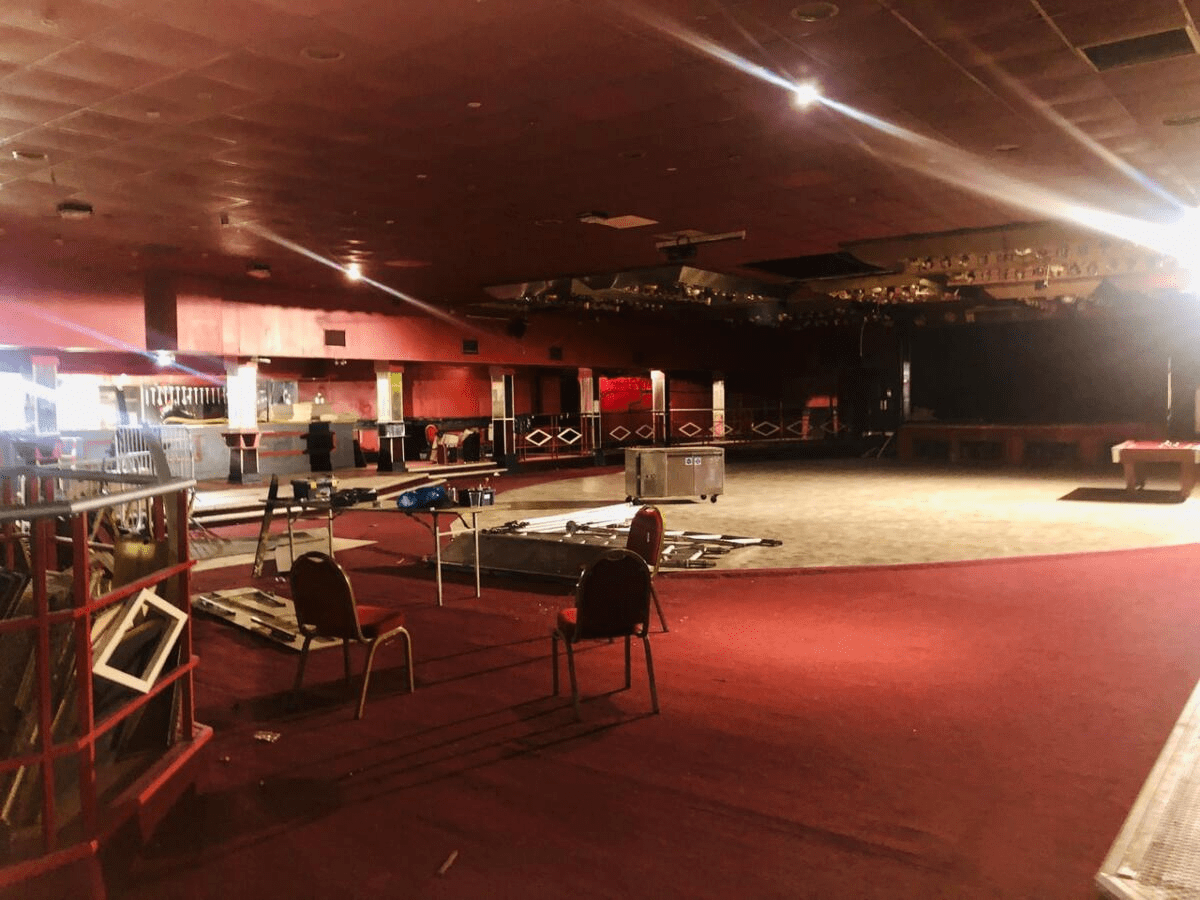
Despite its rich history, the hall could not withstand the changes in leisure culture. In the second half of the 1990s, the Grafton Ballroom was finally transformed into a nightclub. The formats changed – from themed dance nights to Sunday comedy shows – but its former glory could not be restored.
The last dance here took place in September 2008. After that, the building was closed, initially with the idea of redeveloping it into a stand-up venue, but these plans quickly came to nothing. Left unattended, the hall began to fall into disrepair. In 2013, part of the facade collapsed onto the pavement, forcing local authorities to intervene urgently and fence off the site for safety.
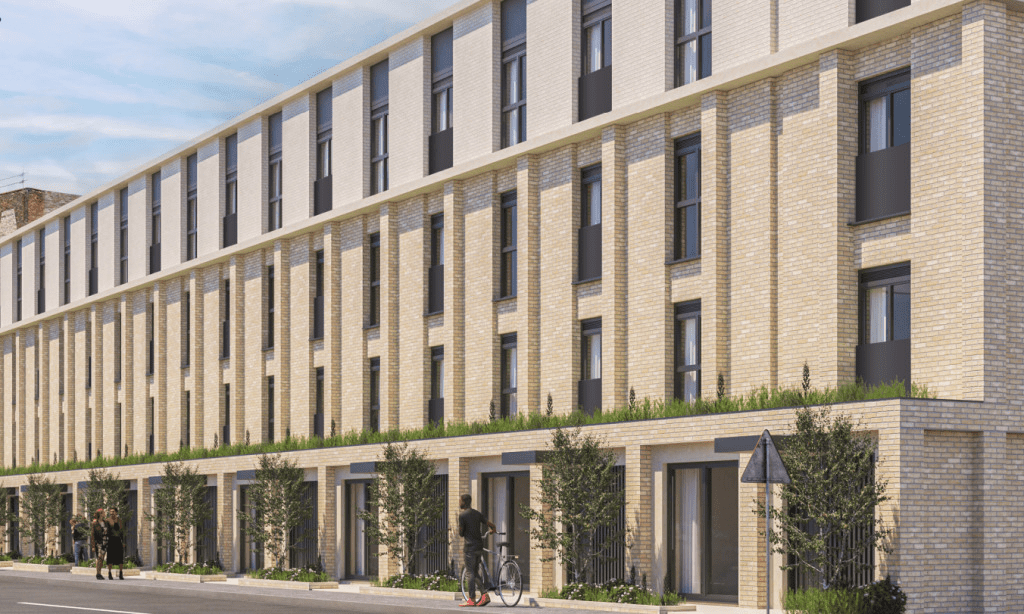
For the next decade, the Grafton remained in this state – with closed doors, broken windows, and a still-recognisable facade. It was this facade, by the way, that was decided to be preserved when plans for a new residential complex on the site of the hall were approved in 2025. Architects promised to integrate this element of history into the modern project – to at least visually remind people that this was once a place where people danced to live music.
The Grafton ceased to be an entertainment hub but remained in people’s memories – as a symbol of a different time, a different rhythm, and perhaps a less cynical approach to nightlife.
The new face of the Grafton: what awaits the former dance legend
The story of the Grafton Ballroom did not end with the last dance. In 2025, it was announced that the building would be partially redeveloped: the historical facade would be preserved, and the rest of the building would be turned into a modern residential complex. The project includes several floors of apartments, retail space on the ground floor, and a landscaped courtyard – all planned to be built on the site where orchestras once played.
This decision caused mixed emotions among Liverpool residents. On the one hand, it’s a way to preserve at least a visual fragment of the past. On the other, it’s a final farewell to the function that made the Grafton Ballroom iconic for the city. There will be no more stage, no more music, no more crowds under the balconies, and no more queues at the entrance. Just a memory, stitched into the facade.
Amidst this redevelopment, it is also worth mentioning that the name Grafton Ballroom appears in contexts other than just Liverpool. In South London, in the area of Dulwich, there is a dance centre with a similar name – the Grafton Dance Centre. And although these places are not connected, confusion happens regularly.
But for Liverpudlians, the word “Grafton” has so much more combined into it. It is a part of the city’s folklore – with music that played loudly, with a ceiling that rattled from the rhythm, and with evenings that began on the dance floor and remained in their memories for decades.