

It wasn’t that Liverpool had become underdogs or were performing terribly. But something was always missing when it came to major honours, as there was always another team that played just a little better in the decisive matches. And then he arrived: the German manager Jürgen Klopp, ushering in a golden era for the club and transforming it into an incredibly powerful force. In this article on liverpoolski.com, we’ll look back at how it happened and analyse the reasons behind his incredible success.
The Arrival of Jürgen Klopp and the Introduction of Gegenpressing
Jürgen Klopp took the helm at Liverpool in 2015. He immediately implemented his famous ‘gegenpressing’ tactic with the English side. This tactical approach involves pressing the opponent as quickly and aggressively as possible immediately after losing possession, often with a group of players swarming the ball.
Football fans might ask: what’s the difference between this and regular, well-known pressing? The version of the tactic that Klopp champions involves trying to suffocate the opposition as close to their own goal as possible, and as aggressively as possible.
When several players press an opponent at once, it can be risky, as it leaves other opponents free to receive a pass. However, the idea is to minimise the chances of the opposition making an accurate pass. Of course, players need to be able to carefully manage their energy, because this style of pressing is a kind of “heavy metal football” – it demands immense stamina, and it’s simply impossible to apply it for the full 90 minutes.
Champions League Success and Premier League Triumph
Major success didn’t come overnight, but arrived in the 2018-2019 season. That year, Liverpool achieved great things on the European stage. Klopp’s tactical genius and the team’s resilience were on full display in the unforgettable comeback against Barcelona and a confident performance against Bayern Munich. The triumph in Madrid against Tottenham Hotspur solidified Liverpool’s status as a European giant.
The peak of Liverpool’s success under Klopp came in the 2019-2020 season when the club broke an agonising 30-year spell without a league title. One of the secrets was a rock-solid defence led by Virgil van Dijk and Joe Gomez, which was almost impossible for anyone to breach. Klopp’s tactical setup allowed Liverpool to amass 99 points in the Premier League, leading to a championship victory with a huge advantage over their closest rivals, Manchester City. The final gap was a staggering 18 points – an incredible achievement!
In addition to their Champions League and Premier League victories, Liverpool FC under Klopp also won:
- The FA Cup (2021–2022).
- The EFL Cup / League Cup (2021–2022 and 2023–2024).
- The FA Community Shield (2022).
- The UEFA Super Cup (2019).
- The FIFA Club World Cup (2019).
The Academy, Young Talent, and ICON Technology
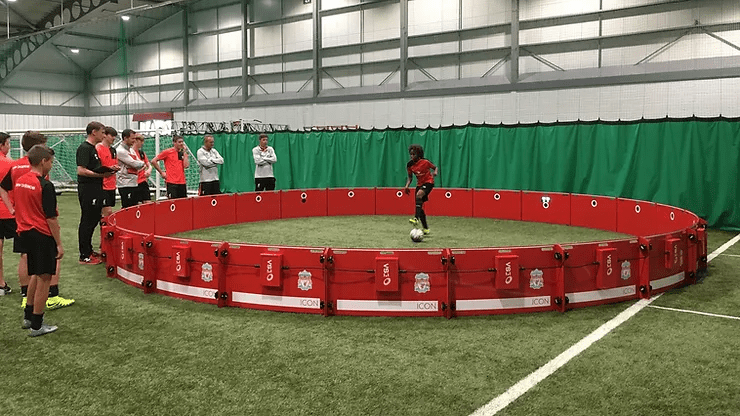
Another important factor in their success was the Liverpool FC Academy in Kirkby, led by Alex Inglethorpe. Famous graduates include Trent Alexander-Arnold and Curtis Jones. Promising young players are often trusted with a place in the first team and they repay that faith. This focus on the academy confirms that the club’s leadership values sustainable development, not just immediate results.
It is also worth mentioning that, at the initiative of its manager, the Liverpool academy has been using ICON (Interactive Cognitive Operational Network) technology since 2016. Its goal is to improve the footballing skills of players across different age groups.
The main objectives of ICON are to develop the following skills in young footballers:
- Confident ball control.
- Effectively finding a target for a pass.
- Increasing the accuracy and efficiency of passes.
Of course, these are skills that experienced first-team players also need to develop. However, it is the young players who make the most progress with the help of this technology.
The Farewell: Klopp’s Legacy
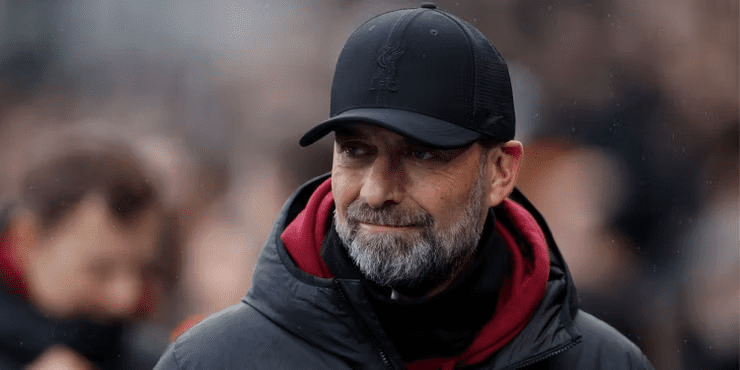
In January 2024, Klopp announced he would be leaving the club. Nothing bad or dramatic had happened. Results were still quite good, but the simple fact was that he had run out of energy for the role and couldn’t face the relentless grind of the job over and over again. Before leaving, he assured everyone that he loved his team, the fans, the city, and the club staff… But he had to leave because the time was right.
In his 491st and final match as manager, Klopp’s side beat Wolverhampton Wanderers 2-0 at Anfield. His win statistics are impressive – 305 victories, if you include drawn matches that were won on penalties. Without them, the figure is 299 wins, which is a 60.9% win rate – the highest of any of his predecessors.
In the period before his departure, Liverpool’s results did dip. The club was knocked out of the FA Cup and the Europa League, and lost its chance to fight for first place in the league. On the other hand, the team consistently scored a lot of goals – across all competitions that season, they found the back of the net 142 times, the second-highest tally in the club’s history (the highest was 147 in the 2021–2022 season, also under Klopp).
There was no fairytale ending. Klopp didn’t leave at the absolute peak of his glory, but he didn’t fail either. He will be remembered for winning Liverpool’s first English league title in 30 years. Jürgen won the Champions League once but also reached the final on two other occasions, losing to Real Madrid. He is also the only Liverpool manager to have won six different major trophies. And in his honour, the fans sang You’ll Never Walk Alone countless times.