

Juggling a successful career in both film and politics is no mean feat. It takes exceptional acting talent, a fierce commitment to public service, and—crucially—a clear vision of how to achieve change. On liverpoolski, we delve into the story of one remarkable Liverpudlian woman who managed just that: Glenda Jackson.
A Defining Career
In both film and on stage, Glenda Jackson was primarily celebrated for portraying strong-willed, intelligent women. Her career peaked during the 1960s and 1970s, a period that saw her clinch two Academy Awards, a Golden Globe, an Emmy, and a Tony Award—a truly remarkable haul.
Jackson herself was known as an intelligent, proactive woman who was never afraid to speak her mind. She famously traded the screen for politics for a period, only to return to acting shortly before her death in 2023, delivering at least two more stellar performances. Sir Jonathan Pryce once called her the best actress in the country—a sentiment shared by many, including Sir Michael Caine.
Biography
Glenda May Jackson was born on 9 May 1936 in Birkenhead, just outside Liverpool. She came from a working-class family. At the age of 16, Glenda made the bold decision to leave school to join an amateur acting troupe. It was a decisive first step towards achieving her dream!
Success on the stage took a decade to materialise. But when it did, it was spectacular! Glenda starred in Peter Brook’s controversial play, Marat/Sade, which was later adapted for the screen. That film marked Ms Jackson’s first significant venture into cinema.
The Academy Awards
In 1969, Glenda May began working with director Ken Russell. This partnership soon led to her first-ever Academy Award for Best Actress in the film adaptation of D. H. Lawrence’s Women in Love. The role included erotic scenes, making her the first woman to win an Oscar for a part with explicit content. Just three years later, the actress won the prestigious film prize again for the comedy A Touch of Class, directed by Melvin Frank. Intriguingly, she failed to attend either ceremony, citing being too busy.
Highlights on Screen
Naturally, Glenda Jackson’s career was packed with brilliant performances. For instance, she played Pyotr Tchaikovsky’s wife, Antonina Miliukova, in the 1971 film The Music Lovers. Other captivating roles included:
- Sarah Bernhardt in the biographical film The Incredible Sarah (1976).
- Elena Bonner in the biographical, and more dramatic, television film Sakharov (1984).
- The leading role in the TV series about Elizabeth I (1971).
- Patricia Neal in The Story of Patricia Neal (1981).
The Call of Politics
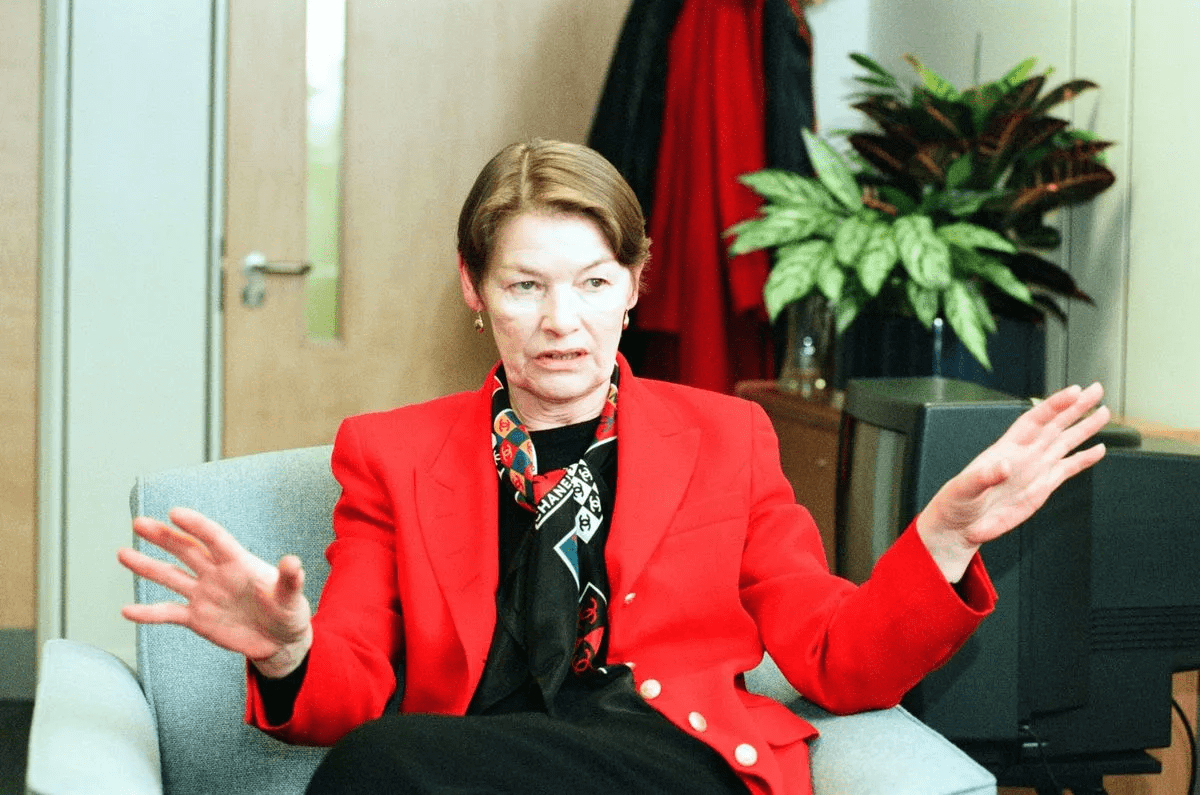
Glenda entered politics in 1990, spurred into action by the tenure of Margaret Thatcher, the ‘Iron Lady,’ who served as Prime Minister from 1979 to 1990. Jackson fearlessly declared that the Conservative leader was destroying Britain. The former actress successfully stood for election and entered Parliament in 1992, representing the Labour Party. She eventually served as Shadow Minister for Transport.
In 1997, Glenda May Jackson joined Tony Blair’s government, becoming Parliamentary Under-Secretary of State for Transport in London. Yet, she remained a fierce critic, even of her own Labour Party, particularly over the introduction of university tuition fees and the Iraq War.
She left the Cabinet in 1999 to run for Mayor of London in 2000. She continued to criticise Tony Blair and advocated for an inquiry into the Iraq War.
She stood down from political life in 2015, making a triumphant return to acting in 2016.
Final Curtain and Legacy
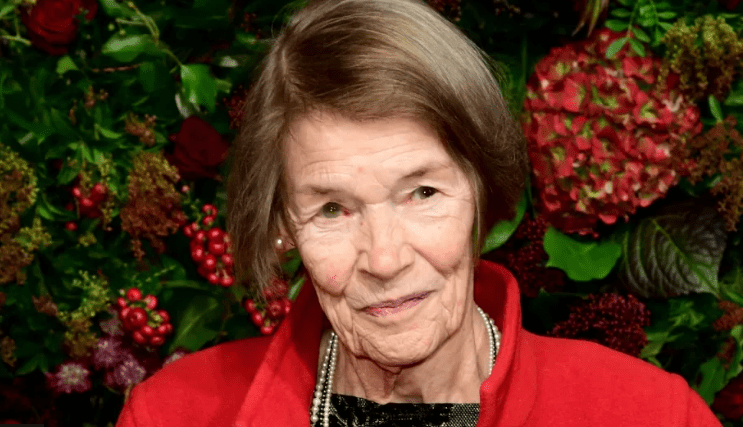
At the age of 80, Glenda May Jackson stunned audiences by playing King Lear in Deborah Warner’s highly successful production, a role she took on after a 25-year hiatus from the stage. She later won a BAFTA for her screen return in the television drama Elizabeth Is Missing (2020). However, age was catching up with her. On 15 June 2023, Glenda May passed away at her Blackheath home at the age of 87.
A Political Mission
Our subject saw her mission as one of rectifying the damaging consequences of Margaret Thatcher’s policies. She passionately campaigned against wars and the associated crimes. Yet, the extent to which she achieved her political goals remains open to debate.
Some may question: Was she a genuine politician, or merely playing the role? Or perhaps she had so deeply inhabited the intelligent, strong-willed women she often played on screen that she truly became one in real life? Quotes published by the BBC help to shed light on this very question.
Glenda Jackson once noted a direct link between acting and politics, adding that
“the best theatre is trying to find and tell the truth. It’s not about cover-up, it’s not about games, it’s not about hiding. It’s not about pretending to be who you are not.”
This leads to her central point. Jackson believed that both acting and politics shared the fundamental goal of seeking the truth: to discover what it means to be human and to understand why we treat each other in the way we do.
Reflections on Cinema
You might assume we’re about to discuss the Oscars or other awards again. But hold on! Let’s hear Ms Jackson’s own thoughts on such accolades.
“It’s very nice to have all these awards, but they don’t make you any better.”
A fair point, wouldn’t you say? What matters far more is who you are and how you execute your work, rather than whether others notice it. This highlights her true talent: the ability to seamlessly handle deep and serious drama alongside comedic roles.
“I worked with her twice in the 70s, and she was always direct, always honest. Her work was simple and concise, like all great art,” said Sir Jonathan, a colleague of the celebrated Liverpudlian.