

Imagine this: a stage, spotlights, a rock and roll band – and the main character in nothing but his speedos. This isn’t a joke; it’s a real musical about Michael Cullen, known as Speedo Mick – a legendary Liverpudlian fundraiser who overcame addiction, raised a million pounds for charity, and became the hero of his own show. Speedo Mick – The Musical at the Liverpool Royal Court Theatre is deeply moving. Why? Find out on liverpoolski.com.
What Speedo Mick – The Musical is about: music, laughter, and pain in one story
At first glance, this is a story about an eccentric man in tight swimming trunks who raised a lot of money for charity and became a local hero. But Speedo Mick – The Musical tells a much deeper and more dramatic story. It is an emotional journey that passes through the darkness of addiction, homelessness, and inner demons, and ultimately leads to hope.
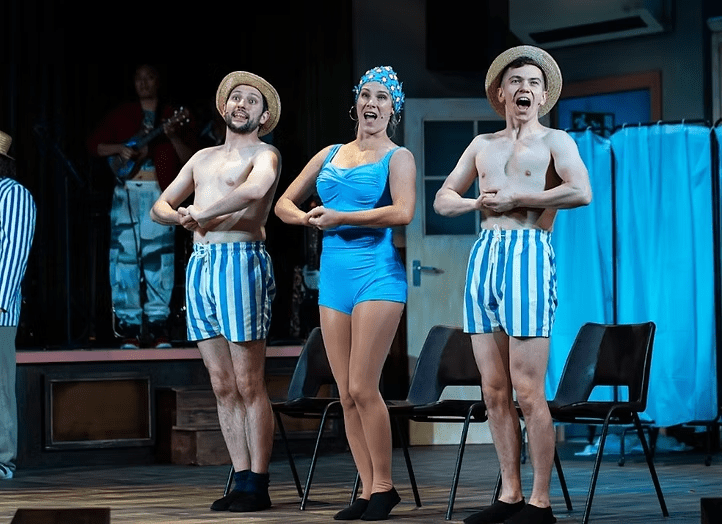
Screenwriter John Fay and composer Boff Whalley brought it all together in a two-hour show that features rock, doo-wop, gangsta rap, and even tunes by the band “The Jam.” But the most important thing is the heart of the story. While watching, the audience empathises, laughs, cries, and leaves the theatre with a strange combination of lightness and heaviness in their hearts.
Critics don’t hide their emotions. Here’s what the Liverpool publication Arts City writes concisely and accurately:
“It’s a story rooted in hopelessness, but it is really about hope.”
And Michael Cullen himself says in a comment to The Guardian that the play does not shy away from difficult topics but does so with warmth and honesty:
“You can’t just watch me running around getting medals… The connection is in something bigger. I hope it’s for everyone who hasn’t yet found a path to recovery.”
This show also tells the story of the strength it takes to get up after you fall. And that even in speedos, you can bring something important to the whole world.
Who is Speedo Mick: from homeless to the hope of a nation
Michael Cullen, who is known today as Speedo Mick, was born and raised in Liverpool. His path to recognition did not begin with red carpets or big stages, but with a deep personal crisis. In his youth, he became addicted to alcohol and drugs, lost his home, his family’s support, and his self-respect. It’s hard to imagine, but Michael lived on the streets for a while, slept under bridges, and almost lost hope for change.
The key moment was his personal struggle with addiction. Eventually, Michael sought help and began his journey to recovery. At the time the musical was released, he had been sober for over two decades – and this experience became the foundation of his mission. It was during that period that Speedo Mick was born – a persona that was meant to draw attention to charity, not through outrageousness, but through openness and humour.
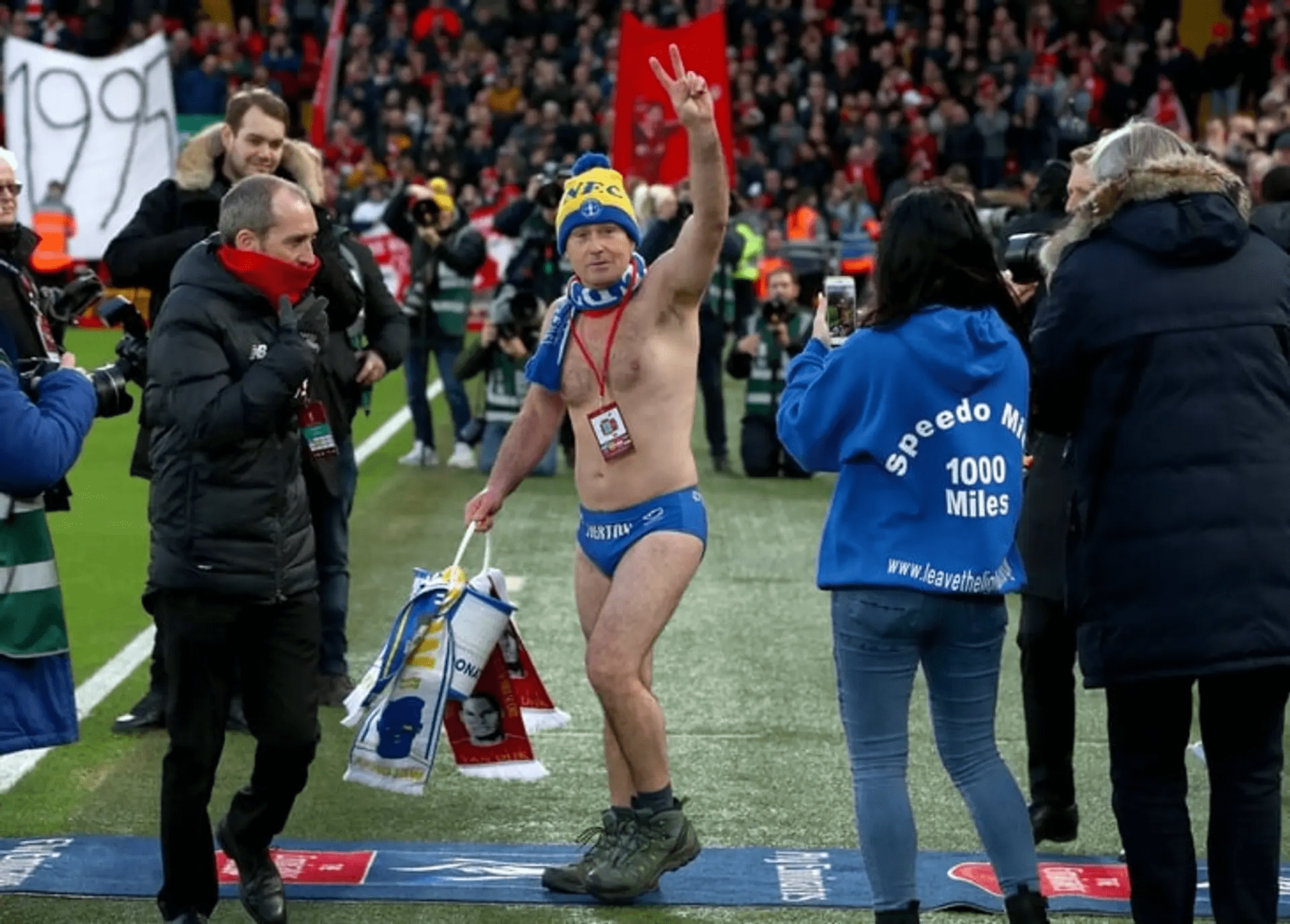
His first appearance in swimming trunks was more of a joke, but it eventually became a recognisable symbol. Speedo Mick is not afraid to look silly – because there’s a serious goal behind it: to raise money for those who are going through the same struggles as he once did. His story is an important reminder that no one is doomed, even if it seems like they’ve hit rock bottom.
1 million pounds in speedos: how Michael Cullen’s charity works
While others take to the stage with a microphone or a guitar, Speedo Mick wins over the audience barefoot, in his trunks, with a smile, and with an honest mission. This is, without exaggeration, one of the most amazing stories in British show business, because where else does charity so organically combine with performance?
Michael Cullen seems to be simply raising money. But no – he does it in such a way that he is followed like a star. His public challenges are theatrical, media-friendly, and dramatic. It’s a show with a hidden meaning. For example, during one of them, Michael Cullen walked the entire length of Britain – from John o’ Groats in Scotland to Land’s End in Cornwall. And along the way, he also conquered the country’s three highest peaks. And he did it all wearing just a pair of swimming trunks.
The result: over a million pounds sterling raised to help the homeless, young people with difficult pasts, and people with mental disorders. Through the SpeedoMick Foundation he created, Michael has already supported almost 170 local initiatives. But what’s important is that he doesn’t give the money to large organisations. His priority is small charitable communities that are often overlooked.
Cullen often repeats that he has gone through everything that those he helps are fighting. His performances are a manifesto: “I survived. And you can too.” In modern show business, where sensationalism often overshadows substance, Speedo Mick draws attention to what is real – sincerity, empathy, and humanity.
A theatre that doesn’t embellish: how critics rated the musical

Speedo Mick – The Musical doesn’t aim to be a glossy biography. And perhaps that is precisely why it resonates so much with audiences and critics. The Royal Court Theatre in Liverpool has created a show that unflinchingly portrays Michael Cullen’s journey – with all the relapses, pain, and shame, and at the same time, an immense strength of spirit.
The lead role is played by Paul Duckworth – and he does it with such dedication that it is sometimes difficult to tell the actor from the prototype. In speedos, with a microphone and an undisguised Scouse accent, he leads the audience through the funny and the tragic. Critics noted, not without irony, that the hero jumps around the stage in such tight trunks that it’s scary just watching him. But what’s important here is not just how he looks or feels, but what’s behind it: pain and hope that can grow even in the most absurd setting.
The music in the show is another main character. The composer, Boff Whalley, mixed rock with a kaleidoscope of doo-wop, calypso, and even elements of rap. There are references to The Jam and The Proclaimers, generously seasoned with Liverpudlian humour. Critics particularly noted not only the sound but also the skill of the actors, who simultaneously play multiple roles and are live musicians.
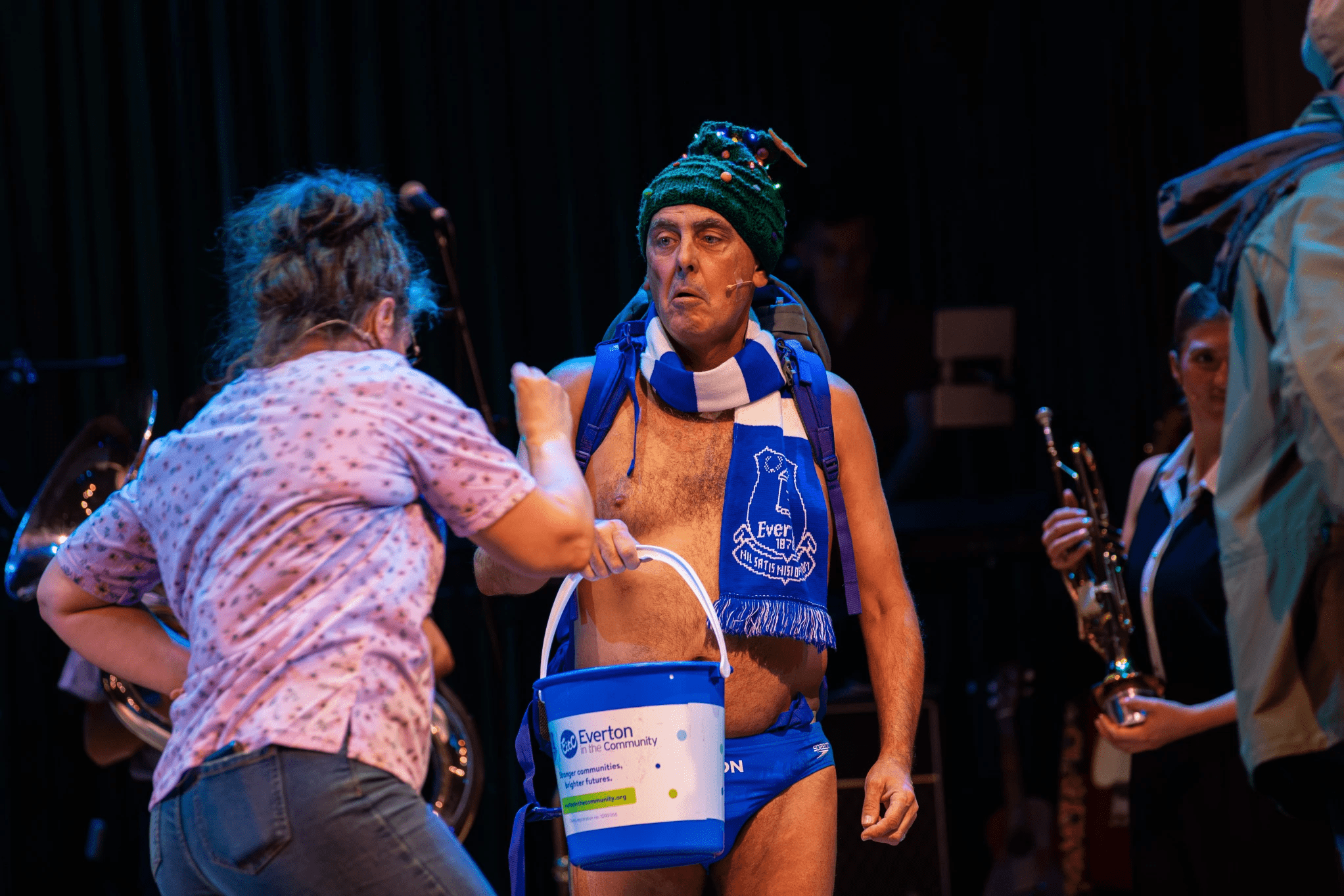
And yet, as the North West End publication points out, the real lasting impression comes not from the soundtracks, but from the story. From the fact that even through songs, dances, and jokes, a real, painful experience shines through. This musical is an important event in show business, but it is also the voice of a community that wants to talk about addiction, vulnerability, and a second chance.
Life after the musical: what is Speedo Mick up to today
After the musical’s premiere, attention to Michael Cullen only increased. But Speedo Mick himself is not in a hurry to bask in the glory – at least not in the way it usually happens in show business. His main stage is not theatres or television studios, but real-life situations where support, advice, or just a helping hand is needed.
Currently, Michael is actively working on several projects. One of them is writing a book where he wants to tell his story in even greater depth. Another is training to become a mental health consultant. His goal is to truly help those who have just started on the path to recovery.
The man from Liverpool also remains closely involved in the work of his foundation. After he physically exhausted himself with his last great adventure (a multi-week journey across Britain plus three mountain peaks), Cullen realised it was time to help in a different way. And while he does not rule out new campaigns in the future, he now works more from the inside – as an organiser, mentor, and example for those who are looking for a way out of the darkness.
And what about his persona? Speedo Mick has remained in the audience’s memory in his trademark trunks. He is a symbol that reminds us that a success story doesn’t always look glamorous. Sometimes it goes through dirty streets, crisis centres, and inner turmoil. But if it is told correctly, it can change the lives of others. And the stage at the Royal Court Theatre Liverpool only confirms that this story, although eccentric, is worth paying attention to, if only for its complexity. By the way, playwright Fred Lawless also made a name for himself on this very stage.