

20th-century British show business had many bright stars, but Ken Dodd held a special place among them. He is remembered in history as a comedian with an endless supply of jokes and as a singer, showman, and a true symbol of Liverpudlian humour. He was known for his long shows, eccentric style, and multicoloured tickling stick. Dodd never left his native Knotty Ash, and it was this attachment to his roots that made him “one of our own” for millions of Britons. In this article on liverpoolski.com, we will tell you about his childhood, his creative and life journey, and his unique character. We will also touch on Ken Dodd’s role in show business and his connection to Liverpool.
Childhood and first steps
Kenneth Arthur Dodd was born on 8 November 1927 in the Knotty Ash area on the outskirts of Liverpool. His was an ordinary working-class family, but the future comedian himself liked to recall that he grew up in “the land of jam and sandwich mines” – his humorous way of describing his home streets.
Even as a boy, Ken was fascinated by the art of telling stories and making people laugh: his first “audiences” were his parents, friends, and neighbours. During his school years, he tried parodies and humorous sketches, and later performed in local clubs and small venues, honing his skills with a live audience. It was these early years that gave him the confidence and stage presence that would later make him a legend of British variety.
Becoming a stage star
Ken Dodd’s first professional steps on stage took place in the 1950s, when he started performing in provincial theatres and clubs. His big debut was in 1954 at the Nottingham Empire Theatre, where the public first saw his distinctive style: a barrage of wit, funny faces, and the ever-present tickling stick – a fluffy prop that became the artist’s calling card. Even then, he stood out from other comedians with his tireless energy and ability to keep the audience “on their toes” for hours.
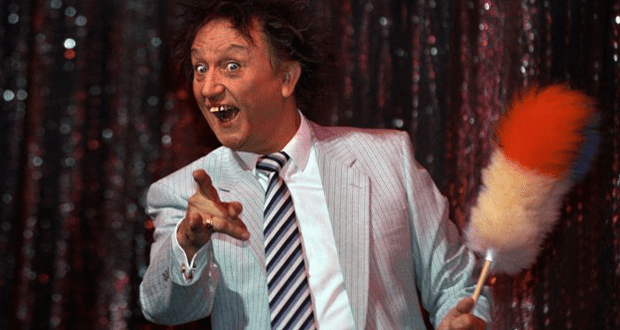
A signature feature of his performances was their incredible length. At a time when a typical show lasted an hour and a half, Dodd could entertain audiences for over three, and sometimes even five, hours at a time. His concerts often ended after midnight, but the audience would stay, unwilling to miss a single line. This approach earned him a reputation as the “man who gives more than others.”
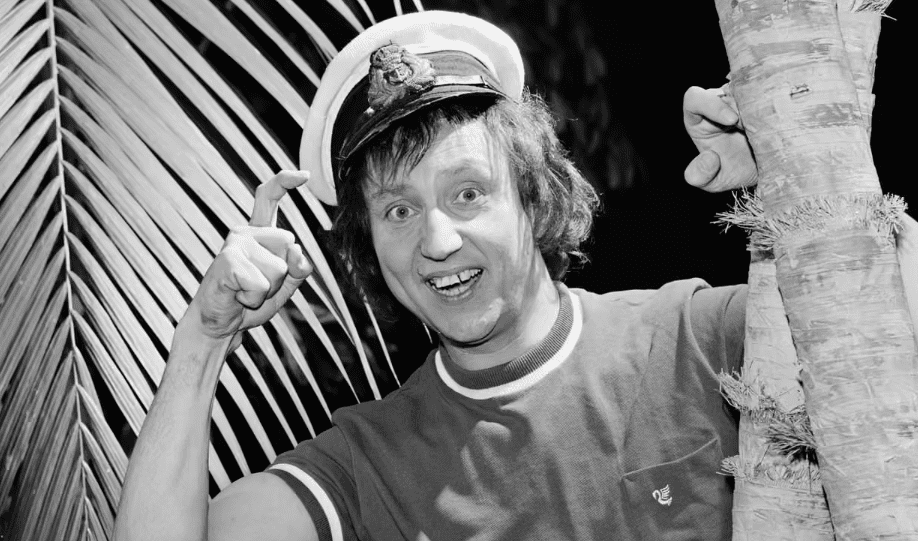
A significant milestone was his tour of major British theatres. Dodd quickly gained popularity by combining classic variety with modern stand-up. He masterfully played with words, built long chains of puns, and used surreal images that distinguished him from the comedians of the time. The British press was already calling him the heir to the music hall tradition, but with a completely new breath of fresh air.
By the end of the 1950s, Ken Dodd’s name had become known throughout the country. He began to be invited to radio and television, and the first serious reviews cemented his image as a comedian with a unique sense of rhythm and impeccable dedication to the stage. It was during this time that he finally established himself as an artist for whom laughter was a true calling.
Some of Dodd’s jokes:
“I haven’t spoken to my mother-in-law for eighteen months – I don’t like to interrupt her.”
“Honolulu has everything: sand for the kids, sun for the wife, and sharks for the mother-in-law.”
Music, television, and fame
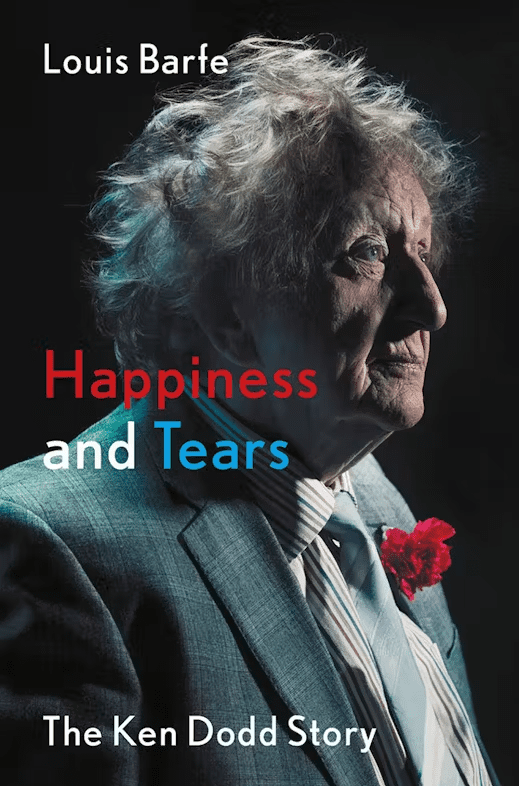
Although Ken Dodd was primarily famous as a comedian, his talent extended beyond the stage. In 1965, he recorded the ballad Tears, which became a sensation: over a million copies sold made it one of the most successful singles of the decade in the UK. And the song Happiness became his signature tune for life, a symbol of the joy he gave his audience.
Television also played an important role in his success. In the 1960s and 70s, he appeared in numerous BBC programmes, including The Ken Dodd Show and Ken Dodd’s Laughter Show. In these broadcasts, he combined monologues, musical numbers, and comedy sketches, proving that he could hold attention on camera just as brilliantly as with a live audience. His performances regularly drew millions of viewers, and his humour remained accessible and understandable to all generations.
In parallel with television, he did not abandon his theatrical tours. His tours covered dozens of cities and were sold out everywhere. Dodd had a rare ability to make every performance unique, improvising and “feeling” the room. This created the effect of a live conversation with the audience, which was far more valuable than pre-rehearsed routines.
During this period, he earned the title of “the last great music hall artist.” His style combined the traditions of British variety with the new wave of comedy, making him popular with both older and younger audiences. The 1960s-80s were the peak of his fame – a time when Ken Dodd transformed from a talented comedian into a national icon.
Personality and controversies
Despite his widespread popularity, Ken Dodd’s life also had its controversial moments. The most famous of these occurred in 1989, when the comedian was accused of tax evasion. During the trial, it was revealed that he had kept over £300,000 in cash in suitcases in the attic of his own house. This story received a lot of publicity, but Dodd was eventually acquitted, and the public saw the case more as an eccentric episode in the artist’s life than as a serious crime.
His personal life was less public than his career. For many years, he was in a relationship with Anita Boutin, who tragically died of a brain tumour. Later, Anna Jones was by his side – a partner with whom he lived for decades. They got married two days before his death in 2018, which became a touching symbol of their long union. Dodd had no children, and, as he himself joked, “the stage had to become my family.”
Ken Dodd is known as a pedant in his craft. He kept numerous notebooks, recording every joke and every audience reaction. For him, humour was a true science – an art that required experimentation and precision. This diligence explained why, even in old age, he remained in excellent form and could perform for hours without losing his pace.
His philosophy was simple: laughter as therapy. He believed that humour heals and gives people a sense of happiness, even in the most difficult times. That is why, despite the scandals and rumours, Ken Dodd’s image in the public consciousness always remained associated with kindness and a love for life.
Ken Dodd’s role in show business and connection to Liverpool
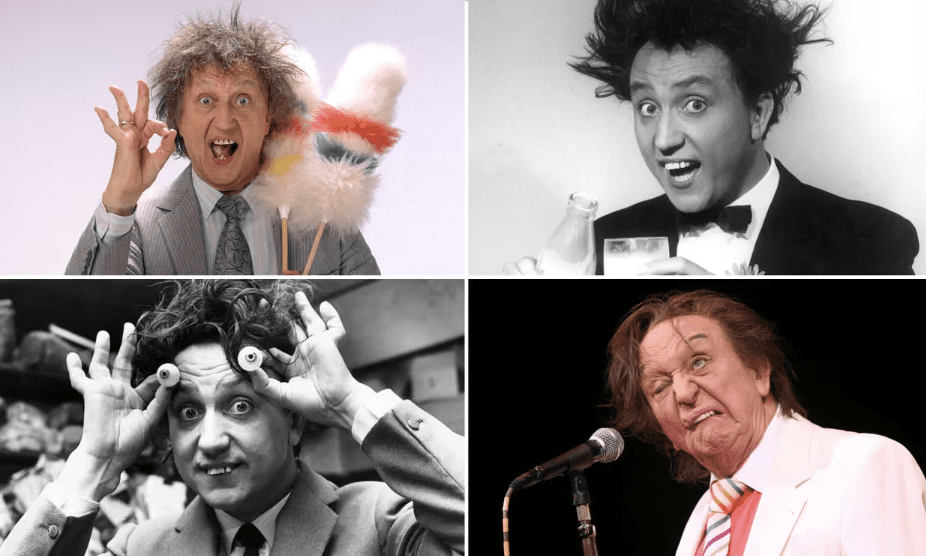
Ken Dodd became a symbol of British show business in the second half of the 20th century. He preserved and multiplied the tradition of variety while simultaneously developing a new stage culture. Dodd knew how to speak a language that was understandable to everyone: from working-class people in pubs to theatre audiences in London. Ken’s contribution was also recognised by the state – in 1982 he received the Order of the British Empire, and in 2017 he was knighted.
Liverpool remained the main stage of his life. He decided not to move to London or other cultural capitals, staying in his native Knotty Ash. His monologues often featured fictional “jam and sandwich mines” or other funny myths about the area, which turned local culture into part of national humour. That’s why people said: Dodd is “the voice of Liverpool.”
After the artist’s death in 2018, a statue of him was erected in Liverpool, and work later began on the creation of the Ken Dodd Happiness Centre – an archive and museum designed to preserve his legacy. This confirmed that for his hometown, he was a cultural ambassador, a man who embodied Liverpudlian humour and cheerfulness no less than Craig Charles or Alexei Sayle.
Today, Ken Dodd is remembered as a unique phenomenon of comedy show business – an example of how a man from a working-class neighbourhood was able to make millions of people laugh. His influence is felt in the work of modern British comedians, and the image of a sincere Liverpudlian with a multicoloured fluffy stick is forever etched in the history of culture.